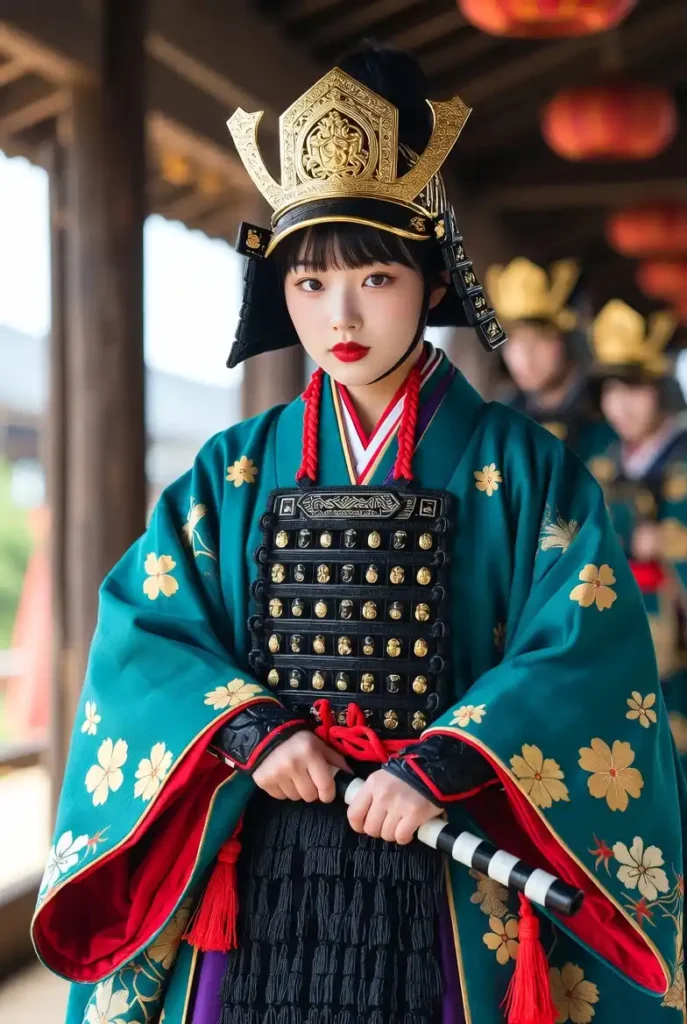
Samurai women (Oku-sama) of the bushi (warrior class) were explicitly expected to defend their homes, estates, and castles as a fundamental duty rooted in loyalty to family, clan honor, and the samurai ethos. While men fought on distant battlefields, wives, mothers, and daughters served as the last line of protection for the household—especially during the chaotic Sengoku (Warring States) period (1467–1603), when warfare was near-constant. This role was not optional; it was a societal and cultural imperative, paralleling male bushido but centered on the “inside” (oku) sphere of the home.Training and MindsetGirls in samurai households began martial training in childhood, alongside literacy, household management, and etiquette. The goal was practical readiness: to safeguard children, servants, and property when husbands were away campaigning or serving at court. Honor (meiyo) demanded they fight to the death if necessary rather than allow capture, rape, or dishonor to the family name.The iconic weapon was the naginata—a long polearm with a curved blade on one end. Its extended reach compensated for differences in strength or size against male intruders, allowing sweeping cuts, thrusts, or defensive spins in tight quarters like castle corridors or home rooms. By the Edo period (1603–1868), naginatajutsu became a formalized martial art practiced by women, symbolizing feminine virtue and self-reliance. Other skills included:
- Archery (yumi): For ranged defense from castle walls, towers, or upper floors—disrupting attackers before they breached gates.
- Kenjutsu (swordsmanship) and dagger use.
- In later conflicts: Firearms (teppo/muskets), as seen with all-female units.
Women also learned to organize defenses: repairing barricades, preparing ammunition, cooking for defenders, and sometimes leading sallies (counter-attacks). Tactical Roles in Home Defense
- Routine protection (peace or low threat): Guarding the inner sanctum of the estate or castle with ladies-in-waiting or female retainers (besshiki onna). Samurai mansions had layered security; women patrolled or stood ready in protected areas.
- During sieges or raids: They manned defensive positions, using ranged weapons from elevated spots. If the outer defenses fell, they fought in close quarters with naginata or swords.
- When husbands were absent: Wives assumed command. They could rally servants, arm themselves, and hold the fort—sometimes for months.
- Last resort: If defeat was inevitable, many performed jigai (ritual throat-cutting with a kaiken dagger) to preserve honor, often after killing or hiding children to prevent their capture. In the Sengoku era, some also washed and prepared enemy heads (kubi) for presentation to victorious generals—a grim but documented wartime duty.
This was pragmatic, not glamorous: homes and castles were targets for looting or revenge, so readiness was survival.Historical Examples
- 1569, Kōnomine Castle (Sengoku): Lady Ichikawa (wife of a Mori clan retainer) took command with her armed ladies-in-waiting while her husband was away, successfully defending the castle.
- 1600, Sekigahara campaign: Komatsuhime (daughter of Honda Tadakatsu) donned armor, refused her father-in-law’s demand to surrender her besieged castle, and prepared to burn it rather than yield—he retreated.
- 1868, Battle of Aizu (Boshin War): Nakano Takeko led a volunteer unit of 20–30 women (Jōshitai) armed with naginata in a desperate charge against imperial forces besieging Wakamatsu Castle. She killed several enemies before being fatally shot; her sister beheaded her at her request to prevent her head becoming a trophy. Other Aizu women (Yamamoto Yaeko with a Spencer rifle, etc.) fought in the defense.
Famous earlier figures like Tomoe Gozen (12th century, Genpei War) blurred lines by fighting openly on battlefields, but most “onna-musha” (female warriors) focused on household protection.Evolution Across Periods
- Heian/Kamakura (pre-1333): Women occasionally fought alongside men (e.g., in Genpei War).
- Sengoku: Peak necessity—women defended towns and castles as men were drafted or killed; archaeology shows female warriors among the dead.
- Edo (peaceful era): Neo-Confucian ideals emphasized domesticity (“inside person” or oku-sama), so active combat declined, but naginata training and the expectation of defense persisted symbolically. Husbands became bureaucrats; wives governed households with latent martial capability.
- Meiji Restoration (1868 onward): The last stand of the tradition during the Boshin War; modernization ended the samurai class.
Not every samurai woman became a frontline fighter—many focused on management and lineage—but the capability and expectation were universal in the class. Lower-status women had less formal training, but the ideal applied broadly.In essence, samurai women were not passive; they embodied resilient guardianship. Their naginata stands today as a martial art (naginata-dō), preserving this legacy of quiet strength and fierce protection.
When the heavy wooden gates of the samurai estate closed behind a husband riding off to campaign, the fortress did not stand unguarded. To understand the true tapestry of the lifestyle of Japan’s warrior elite, we must shatter the illusion that the martial spirit was the exclusive domain of men. While the men bore the long sword to strike at enemies on distant, blood-soaked battlefields, it was the women who were entrusted with the sacred duty of defending the household.
For the women of the bushi class, holding the home was not merely a matter of locking doors; it was a profound martial and spiritual obligation, woven with the same threads of loyalty, courage, and iron-clad resolve that governed their husbands.
The Guardian of the Inner Sanctum: The Heavy Mantle of the Oku-sama
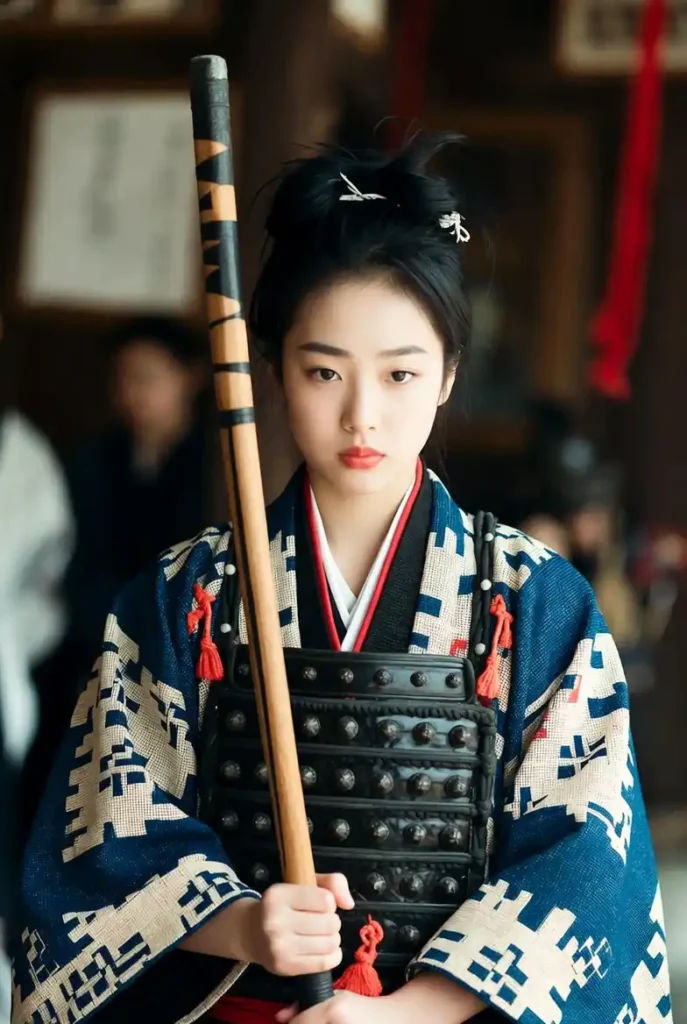
Within the architecture of the samurai class, a woman was respectfully referred to as the oku-sama, which translates beautifully to “the inside person” or “the honored one within”. Because her warrior husband was frequently away serving his lord or fighting in clan conflicts, the oku-sama functioned as the absolute commander of the domestic sphere. She managed the estate’s finances, directed the servants, and oversaw the rigorous education of the next generation of warriors.
However, this administrative power came with a lethal caveat. In times of war, she was the estate’s final line of defense. Samurai men were able to march to the front lines and face the terrifying prospect of death unflinchingly because they possessed an absolute, unwavering trust in their wives. They fought with the comforting knowledge that their household was safe, fiercely protected by the woman left behind.
The Arc of the Naginata: Martial Arts for Samurai Women
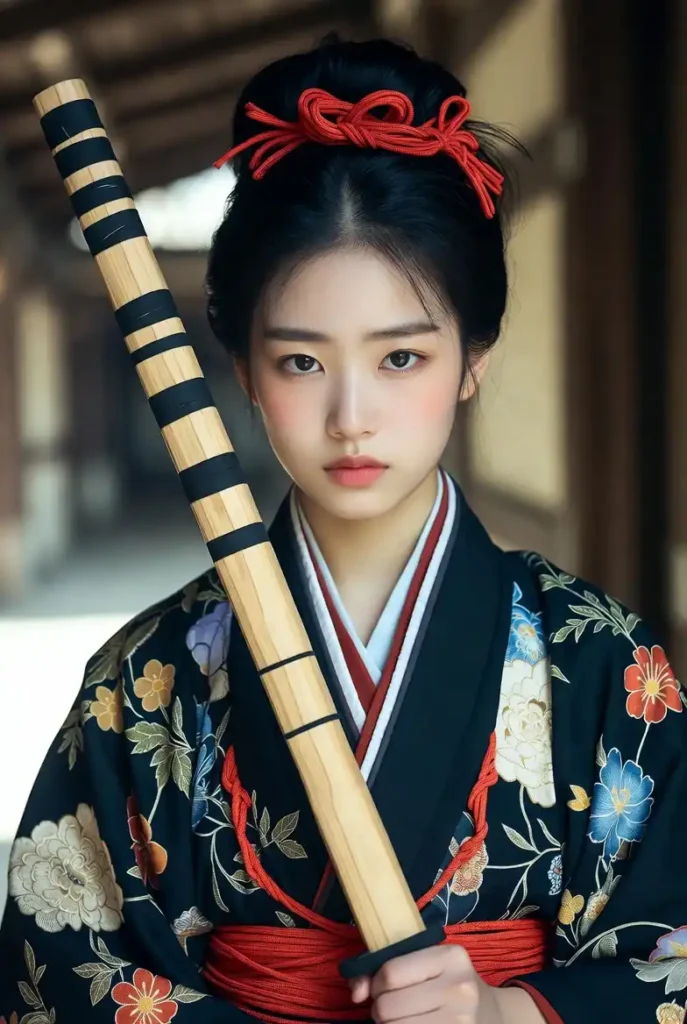
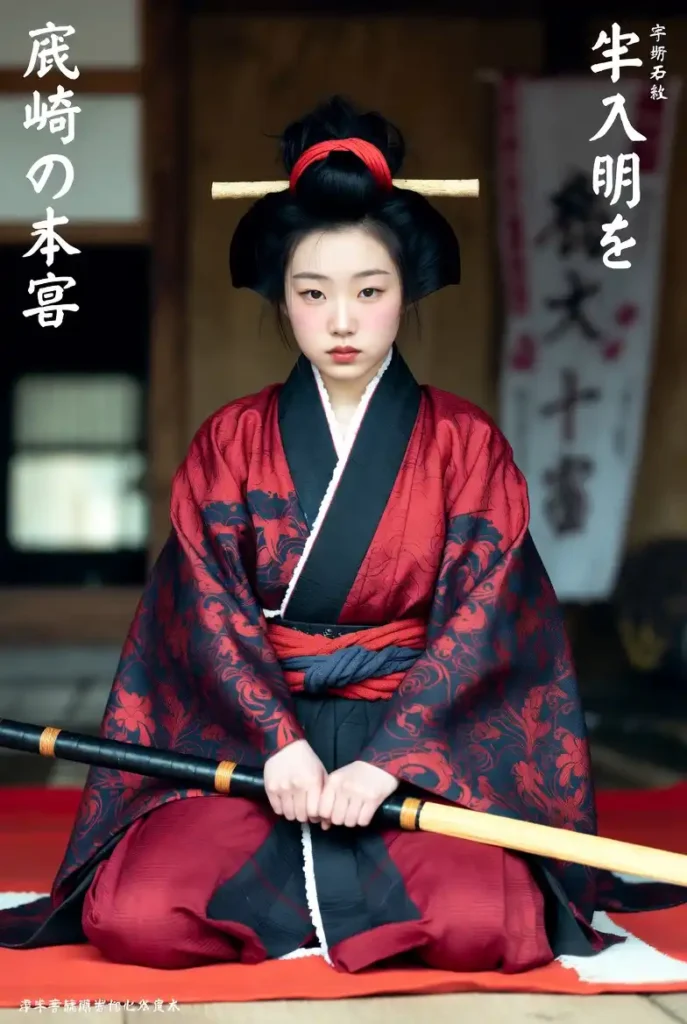
To fulfill this heavy responsibility, women of the samurai class were thoroughly trained in the martial arts. While they were sometimes familiar with archery and swordplay, the weapon most intimately associated with the samurai woman was the naginata.
The naginata is a devastating polearm featuring a long wooden shaft crowned with a curved, katana-like blade. This weapon was a masterpiece of tactical engineering for a female defender. Because women generally could not rival men in raw, upper-body physical strength, the naginata offered a profound equalizer. The immense reach and leverage provided by the long staff allowed a skilled female practitioner to keep a male attacker at bay, striking with sweeping, fluid cuts that could easily fell a charging swordsman.
This weapon was so central to her identity that it was often kept readily accessible within the home, a constant, gleaming reminder of her duty to protect the lineage against marauders, rival clans, or assassins.
The Blade of Final Resolve: Tantojutsu and the Kaiken
If the outer walls fell and the estate was breached by an overwhelming force, the samurai woman was prepared to make the ultimate sacrifice. Personal honor and the immaculate reputation of the family name were paramount, valued far above the fleeting breath of life. To be captured by an enemy meant facing unspeakable humiliation, torture, and a catastrophic disgrace to her bloodline.
To prevent this, samurai women were trained in tantojutsu—the lethal skill of the knife. They carried a small, concealed dagger known as a kaiken on their person at all times, a chilling symbol of their readiness to die for their honor.
If defeat was absolutely inevitable, the oku-sama would commit a highly ritualized form of suicide, often referred to as jigai. Unlike the abdominal cut of male seppuku, a woman would prepare for death by kneeling in an honorable, dignified posture. She would meticulously tie her legs together with a sash or cord; this was a final act of supreme self-control, ensuring that her body would maintain a modest and graceful form even in the violent throes of death. She would then take her kaiken and swiftly slit her own jugular vein. It was a heartbreaking, poetic expression of absolute loyalty, where she cleansed her family of dishonor with her own blood.
Echoes of the Onna-bugeisha: Historical Heroines of the Castle Siege
While the primary expectation was for women to defend their immediate households, the chaotic tides of Japanese history often forced them into larger conflicts, where defending the “home” meant defending the entire castle during a siege.
These fierce women, known as onna-bugeisha (female warriors), proved that their martial training was not merely ceremonial. One of the most evocative examples occurred during the Boshin War in 1868, as the samurai era met its tragic twilight. When the imperial forces laid siege to Wakamatsu Castle—outnumbering the defending Aizu clan by 20,000 to 3,000—the women of the castle took up arms. A samurai woman named Nakano Takeko organized a front-line unit of female warriors. Armed with her naginata, she bravely charged directly into the enemy lines, cutting down numerous soldiers before she was fatally shot in the chest. True to the samurai code of honor, rather than allowing the enemy to take her head as a trophy, she had her sister sever it so it could be brought home in dignity.
Through the mastery of the naginata, the unyielding edge of the kaiken, and an immense spiritual fortitude, the women of feudal Japan stood as the beautiful, terrifying bedrock of the samurai household.
The Forges of the Modern Warrior: Master Artisans and Armorers
To walk the path of the bushi is to appreciate the profound weight of iron, leather, and silk. For those seeking to wrap themselves in the historical legacy of the samurai, several masterful workshops and digital armories not only craft these magnificent panoplies but deeply chronicle the evolution of the warrior class.
Iron Mountain Armory (samurai-armor.com / ironmountainarmory.com)
This armory is a revelation for both the martial artist and the historian. They masterfully detail the genealogy of yoroi (armor)—from the imposing, boxy silhouettes of the Heian mounted archers to the highly efficient, bullet-deflecting tōsei-gusoku (“modern equipment”) of the Warring States period. Beyond their rich historical guides, they handcraft fully functional, customizable armor sets, alongside authentic traditional garments like the hakama and the cross-over hakama-shita.
Marutake Armor Factory (marutake-yoroi.myshopify.com/en)
Located in Kagoshima Prefecture, Marutake is the undisputed titan of Japanese armor reproduction, commanding roughly ninety percent of the domestic market for replica armor used in cinema and historical festivals. Their online platform offers beautiful insights into the meticulous, traditional methods required to wear and maintain the armor, while selling breathtaking replicas of legendary warlords like Oda Nobunaga and Takeda Shingen.
Pacific Armory (pacificarmory.com)
For the uninitiated stepping into the world of Japanese metallurgy, Pacific Armory serves as a profound educational gateway. They beautifully demystify the complex terminology of the samurai panoply—breaking down the spiritual and practical purposes of the kabuto (helmet), the terrifying menpō (face mask), and the dō (cuirass). In tandem with this education, they supply handcrafted, authentic-style armor sets built for display, reenactment, and martial practice.
Sanctuaries of Antiquity: Museums and High-End Dealers
For the dedicated collector seeking to possess a genuine artifact forged centuries ago, these institutions bridge the gap between historical preservation and global commerce.
Samurai Museum Shop (samuraimuseum.jp/shop/)
Born from the Samurai Museum in Tokyo’s bustling Shinjuku district, this shop acts as an educational and cultural nexus. They publish detailed guides on how to legally acquire and care for authentic Japanese swords, while offering an astonishing inventory. Here, one can acquire museum-grade antique katanas, intricately carved tsuba (handguards), and magnificent Marutake replica armors.
Samurai Store (samuraistore.com)
This esteemed gallery operates with a deep reverence for the “ceremonial prestige aesthetic” of the Edo period. They offer a staggering array of 100% handcrafted replica armors, but their true allure lies in their curation of highly certified, antique yoroi and kabuto from the 16th to 19th centuries.
Giuseppe Piva Japanese Art (giuseppepiva.com)
Operating at the pinnacle of art dealing, this gallery offers deeply evocative, scholarly articles on the fundamental anatomy and construction of the samurai helmet. For the affluent collector, they offer extraordinarily rare, museum-quality antique armors and helmets, such as the exquisite Suji-bachi and Mōsunari kabuto.
The Path of the Martial Artist: Armaments and Traditional Garb
To understand the philosopher-poet heart of the samurai, one must look at the tools and garments that defined their daily, disciplined existence.
Tozando (tozandoshop.com / japanesesword.net)
Rooted in Kyoto, Tozando is an indispensable resource for the modern budō practitioner. Their blog is a treasure trove of historical research, exploring the daily routines, spiritual philosophies, and economic struggles of the Edo-period warrior. Alongside this profound storytelling, they sell an exhaustive array of martial arts equipment, newly forged katanas (shinsakuto), and traditional yoroi armor.
TrueKatana (truekatana.com)
This platform weaves evocative tales of historical samurai elegance, offering deep walkthroughs of the evolution of civil and martial clothing—from the restrictive kamishimo of the Edo courts to the breathable hitoe worn beneath armor. They cater to enthusiasts by selling a vast array of katanas, ninja swords, and complete Japanese samurai armor sets.
Katana Sword / Katana US (katana-sword.com / katana-us.com)
Delving into the invisible architecture of the warrior’s mind, their articles explore the intimate, spiritual relationship between the samurai, the sword as the “soul of the warrior,” and the overarching ethos of bushidō. Their storefront provides an extensive selection of custom blades, display swords, and samurai armor.
The Global Armories: Merchants of the Blade and Scale
The aesthetic of the samurai has transcended the borders of Japan, maintained by passionate global merchants who ensure the legacy of the bushi continues to echo around the world.
Kult of Athena (kultofathena.com)
As one of the largest global arms dealers, they chronicle the violent, beautiful evolution of the katana and the warriors who wielded it. Their vast inventory includes everything from raw blades to complete suits of samurai armor.
Suigenkyo Online Store (suigenkyo.store)
A beautiful digital space dedicated to preserving the history of Japanese craftsmanship. They offer deep cultural context and interviews with artisans, while serving as a primary vendor for the masterfully crafted Marutake samurai armor and exquisite civilian crafts.
Guardians Vault Australia (guardiansvaultaustralia.com)
This outfitter provides the physical foundation of the warrior’s attire. They offer traditional garments like the flowing hitatare kamishimo—the “upper and lower” clothing set—alongside samurai armor and weaponry.
Battle-Merchant (battlemerchant.com)
A sprawling European hub for historical reenactors. Their blog discusses the profound connection between Zen Buddhism, the bushidō code, and the art of swordsmanship. They supply a diverse range of armors, katanas, and maintenance kits.
Espadas y Más (espadasymas.com)
This Spanish marketplace explores the melancholic legacy of the rōnin (masterless samurai) and the profound bond of honor forged in steel. They cater to the European market with an array of anime-inspired weapons, historical Japanese helmets, and martial armor.
Wyrmwick (wyrmwick.com)
Though primarily focused on European and fantasy aesthetics, this UK-based armory provides high-quality polyurethane armor replicas for historical reenactment, film, and theater, offering an accessible entry point for those wishing to don the heavy mantle of the past.
Latest Posts
- The primary weapon of the samuraiThere was no single primary weapon across their entire history; rather, their favored instrument of war evolved in harmony with the changing tides of battle and society. The wind howls across the plains of feudal Japan, carrying the scent of pine and impending conflict. When we picture the noble samurai standing amidst this tempest, our modern minds instinctively draw a single, curved blade in their… Read more: The primary weapon of the samurai
- Kurosawa’s films influence modern stories like Star WarsWhen we gaze up at the starlit expanse of a cinematic galaxy far, far away, we are, in truth, looking down into the rain-soaked mud and mist of feudal Japan. Long before lightsabers hummed in the dark, the sharp ring of the samurai sword echoed through the visionary mind of Japanese auteur Akira Kurosawa. To understand the genesis of modern storytelling—most notably George Lucas’s Star Wars saga—we must journey… Read more: Kurosawa’s films influence modern stories like Star Wars
- Mono no AwareIt fit not as a contradiction, but as the very heart of the samurai soul. Mono no aware — that exquisite, aching awareness of how beautiful things are precisely because they are fleeting — was never a soft indulgence for the bushi. It was the emotional and philosophical steel that made their hardness meaningful. The Shared Language of ImpermanenceThe warrior class lived and breathed mujō… Read more: Mono no Aware
- The Guardian of the Inner Sanctum: The Heavy Mantle of the Samurai Women (Oku-sama)Samurai women (Oku-sama) of the bushi (warrior class) were explicitly expected to defend their homes, estates, and castles as a fundamental duty rooted in loyalty to family, clan honor, and the samurai ethos. While men fought on distant battlefields, wives, mothers, and daughters served as the last line of protection for the household—especially during the chaotic Sengoku (Warring States) period (1467–1603), when warfare was near-constant.… Read more: The Guardian of the Inner Sanctum: The Heavy Mantle of the Samurai Women (Oku-sama)
- The magnificent Owari Tokugawa helmet (kabuto) and menpō (face guard)To stand before the hereditary treasures of the Owari Tokugawa clan is to be confronted by the breathtaking weight of power, frozen in iron, lacquer, and silver. Housed within the hushed galleries of the Tokugawa Art Museum in Nagoya—a sanctuary preserving the unbroken lineage of the most senior branch of the Tokugawa shogunate—these artifacts tell the story of a warrior elite transitioning from the chaos… Read more: The magnificent Owari Tokugawa helmet (kabuto) and menpō (face guard)