Akira Kurosawa Seven Samurai Classic. How far can the soul of a sword travel? Is it bound by the gravity of the earth, destined only to echo in the rain-drenched soil of 16th-century Japan, or does the spirit of the bushi transcend into the cold vacuum of space?
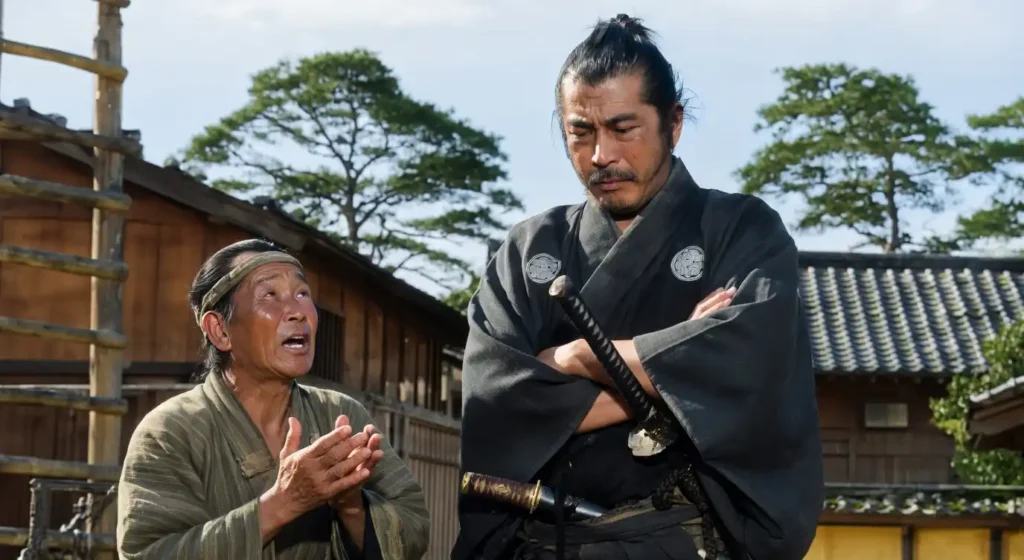
As a researcher walking the path of Japan's warrior elite, I am constantly moved by how this history refuses to remain buried in the past. Recently, an evocative article began circulating with a headline that demanded attention: A Sci-Fi Remake Of An Akira Kurosawa Samurai Classic Has To Be Seen To Be Believed. While the renewed critical buzz makes the conversation feel entirely fresh, the film at the heart of this discussion is the 1980 cult classic Battle Beyond the Stars. It is a breathtaking anomaly of cinema—a vibrant, chaotic reimagining that takes the ancient honor codes of feudal Japan and hurls them into the cosmos.
Here is how the legendary way of the warrior found a new home among the stars.
The Ancestral Blueprint: Mud, Blood, and Nobility
To understand this cosmic adventure, we must first look to the immovable bedrock upon which it was built: Akira Kurosawa’s 1954 masterpiece, Seven Samurai. Set against the brutal, churning warfare of the Sengoku period, Kurosawa's original epic tells the story of a desperate farming village that decides to hire seven masterless ronin to protect their meager harvest from a horde of ruthless bandits.
Kurosawa did not merely craft a jidaigeki (period drama); he forged a new narrative architecture. By elevating the perspective of the lowliest peasants and showcasing the grueling reality of combat, he birthed the now-ubiquitous "assembling the team" trope. He proved that the human heart resonates deeply with the story of disparate, flawed warriors uniting for a selfless, doomed cause.
Forging Steel into Starships: A Galaxy in Need of Heroes
It was this profound, structural brilliance that captured the imagination of legendary American producer Roger Corman. Directed by Jimmy T. Murakami, Battle Beyond the Stars strips away the historical Japanese regalia and replaces it with the glittering expanse of a science-fiction universe.
The narrative mirrors its ancestor with staggering fidelity. Instead of desperate Japanese farmers offering handfuls of rice to hungry swordsmen, we are introduced to a peaceful alien planet under threat from a tyrannical cosmic warlord. In a desperate bid for survival, the peaceful inhabitants send out a plea across the galaxy, seeking mercenaries willing to defend their world from absolute annihilation.
Archetypes of the Void: The Wandering Ronin
What makes this 1980 adaptation so deeply mesmerizing is how it translates the bushidō ethos—the unwritten, evolving way of the warrior—into colorful science fiction archetypes. The film features a wonderfully eclectic cast stepping into the spiritual shoes of Kurosawa's samurai, including Richard Thomas, Sybil Danning, Sam Jaffe, John Saxon, and the "Space Cowboy" George Peppard.
Most poetically, the film casts Robert Vaughn, an actor who had previously starred in The Magnificent Seven—John Sturges's famed 1960 Western remake of Seven Samurai. Through Vaughn's presence, the film creates a breathtaking, invisible bridge connecting three distinct worlds: the muddy battlefields of feudal Japan, the
dusty trails of the American West, and the distant, laser-scorched stars.
The Eternal Resonance of the Samurai Soul
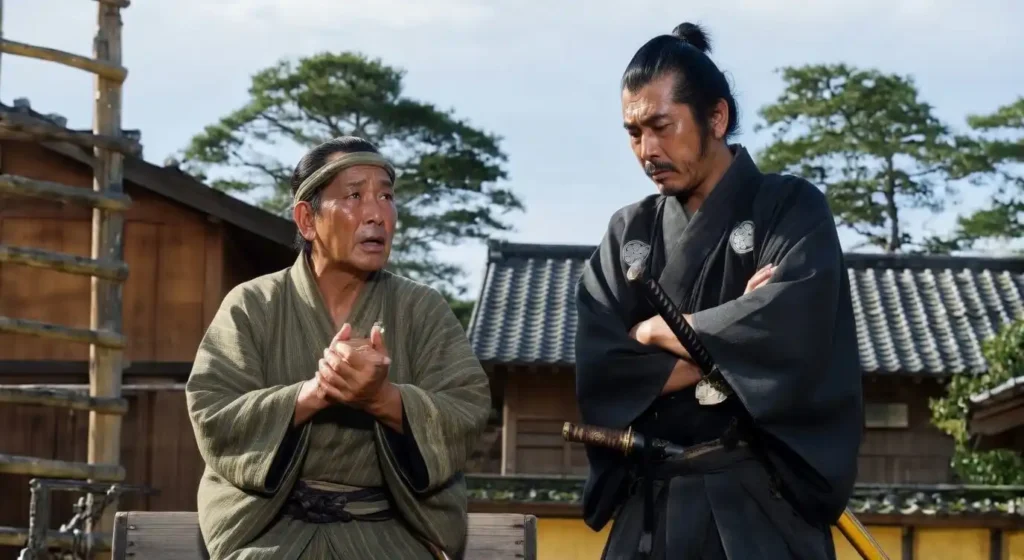
Whether clad in the lacquered iron armor of the 16th century, wearing a gunslinger's Stetson, or piloting sleek starfighters across the galaxy, the essence of the samurai remains unbroken. The struggle between duty and personal survival, the willingness to lay down one's life for those who cannot defend themselves—these are not relics of a forgotten Japanese era. They are the eternal melodies of the human condition.
If you wish to see how the legendary discipline and profound humanity of the samurai have rippled through the cinematic universe, Battle Beyond the Stars is a journey worth taking. It is a reminder that the way of the warrior knows no bounds, echoing endlessly into the future.
About Akira Kurosawa Seven Samurai
Mud, Blood, and the Driving Wind: The Architecture of a Masterpiece
Kurosawa did not merely tell a story; he revolutionized the very grammar of global cinema. He approached the film with an immaculate realism, going so far as to create a detailed registry and family tree for all 101 peasant characters in the village, instructing his actors to live and work as those specific families during the grueling year-long shoot.
To capture the kinetic frenzy of combat, Kurosawa shattered the traditional shot-by-shot method of his predecessors. He pioneered the use of multiple cameras rolling simultaneously, allowing his actors to perform without knowing which lens was capturing them, thus achieving a raw, unmannered authenticity. He utilized telephoto lenses to flatten the visual plane, plunging the audience directly under the hooves of charging horses and into the swirling chaos of the battlefield.
Even the weather in Seven Samurai acts as an active, breathing character. Kurosawa utilized a howling, driving wind throughout the film as a powerful symbol of the winds of change and adversity, signaling the tragic loss of the samurai culture. The climactic battle is fought in a blinding, frenzied downpour, visualizing the hellish fusion of social classes as warriors and farmers bleed together in the mud.
The Echo of the Blade: A Legacy Forged in Celluloid
The impact of Seven Samurai reverberated far beyond the shores of Japan, fundamentally altering the trajectory of modern storytelling. Kurosawa’s narrative framework—the "assembling the team" trope—became a permanent fixture in global cinema. It directly inspired the American Western The Magnificent Seven (1960), transposing the noble swordsmen into hired gunslingers on the dusty frontier. Even George Lucas looked to the quiet wisdom of Kurosawa's Kambei when shaping the character of Yoda, and utilized the film's mentor-student dynamics to forge the Jedi Order in Star Wars.
Yet, beneath the thrilling action and the legendary swordplay lies a profound, melancholic truth. When the rain finally clears and the bandits are vanquished, the surviving samurai stand apart, watching the farmers joyously plant their new rice crops to the sound of traditional songs. The barriers of class have been rebuilt. The samurai realize the bitter paradox of their existence: their violence, no matter how noble, ultimately does society no good.
As Kambei watches the villagers celebrate, he utters a line that continues to haunt the history of cinema: "In the end, we lost this battle too... The victory belongs to those peasants. Not to us". The earth remains, the farmers endure, and the noble samurai are simply blown away by the winds of time.
International influence
Initially early samurai films were influenced by the still growing Western film genre before and during World War II. Since then both genres have had a healthy impact on one another. Two forefathers of the genre, Akira Kurosawa and Masaki Kobayashi, were influenced by American film directors such as John Ford.
A number of western movies have re-told the samurai movie in a Western context, particularly Spaghetti Westerns. Italian director Sergio Leone's A Fistful of Dollars and Walter Hill's Last Man Standing are both remakes of Yojimbo. Clint Eastwood's Man with No Name character was modeled to some degree on Mifune's wandering rōnin character that appeared in so many of his films. The Hidden Fortress influenced George Lucas when he made Star Wars. Seven Samurai has been remade as a Western and a science fiction context film, The Magnificent Seven and Battle Beyond the Stars. Other samurai influenced western movies include Charles Bronson and Toshirō Mifune in Red Sun (1971), David Mamet's Ronin (with Jean Reno and Robert De Niro), Six-String Samurai (1998) and Ghost Dog: The Way of the Samurai (1999).