To the romantic imagination, the twilight of the samurai evokes the image of a sudden, glorious, and tragic final stand upon a blood-soaked battlefield. Yet, the historical reality is far more melancholic. The decline of Japan’s warrior elite did not begin with the crack of modern rifles, but rather with the slow, invisible rust that accumulates during centuries of profound peace. The unraveling of the bushi (warrior) class began during the very era of their greatest political supremacy: the Edo period (1603–1868), accelerating into a profound identity crisis by the mid-nineteenth century.
The Gilded Cage of the Pax Tokugawa
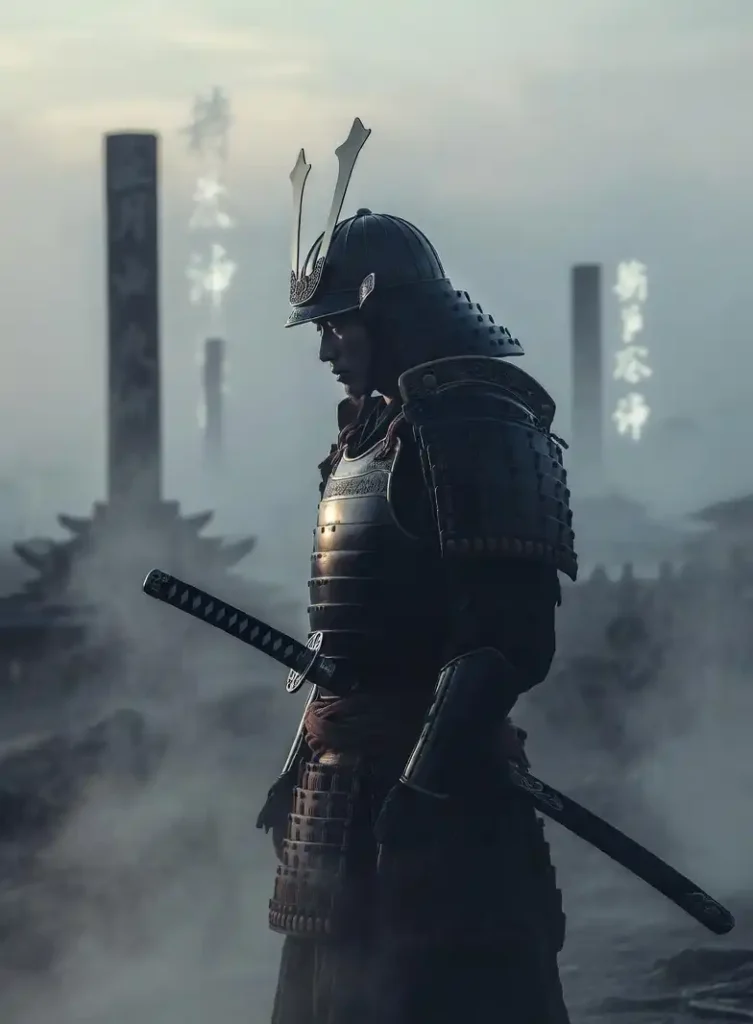
When Tokugawa Ieyasu unified Japan and established the shogunate in 1603, he brought an end to the chaotic centuries of the Sengoku (Warring States) period. To maintain this hard-won peace, the Tokugawa regime froze the social order, establishing a rigid hierarchy where the samurai sat at the absolute apex. However, this 250-year era of tranquility, often called the Pax Tokugawa, inadvertently sowed the seeds of their destruction.
Stripped of their battlefields, the samurai were removed from their ancestral lands and corralled into castle towns. Here, they underwent a profound transformation from active, autonomous warlords into sedentary civil administrators, scholars, and bureaucrats. While they rigorously maintained their martial arts in the dojo, the practical application of their lethal skills withered. The “way of the warrior” evolved from practical battlefield tactics into a formalized, intellectual doctrine of spiritual development and etiquette. The samurai had become a warrior class with no wars to fight, existing in a gilded cage of their own making.
The Weight of the Koku: Economic Starvation in a Cash World
The most devastating blow to the samurai class was not military, but economic. During the Edo period, a samurai’s wealth and stipend were measured in koku—a volume of rice theoretically sufficient to feed one man for a year.
While the samurai were paid in rice, the broader Japanese economy was rapidly modernizing into a vibrant, commercial system driven by cash—specifically gold and silver. Forbidden by their own strict moral codes and laws from engaging in commerce or trade, the samurai were forced to convert their rice stipends into cash through brokers, leaving them entirely at the mercy of market fluctuations.
Simultaneously, the shogunate enforced the Sankin-kōtai (alternate attendance) system, which required feudal lords to maintain lavish residences in Edo and travel with massive, theatrical processions. This mandatory extravagance severely drained the wealth of the samurai. By the 18th and early 19th centuries, the samurai found themselves deeply, irrevocably indebted to the chōnin (merchant class)—a group that technically occupied the very bottom of the social hierarchy. Impoverished lower-ranking warriors were reduced to taking up menial cottage industries, crafting umbrellas or raising crickets just to stave off starvation. The economic foundation of the warrior class was rotting from beneath them.
The Paradox of the Black Ships and the 1840s Awakening
The fatal fracture of the samurai estate system accelerated rapidly in the 1840s and 1850s, driven by the looming threat of Western imperialism. The arrival of the American “Black Ships” commanded by Commodore Matthew Perry in 1853 exposed the glaring technological obsolescence of the shogunate.
Faced with this existential threat, reformist samurai realized that to protect Japan, they had to return to their original, specialized military duty. However, the reality of modern warfare presented a devastating paradox. To build a strong, capable military, the Japanese could no longer rely on hereditary swordsmen fighting individual duels; they required massed infantry, modern firearms, and conscripts trained in Western tactics. As firearms took only weeks to master, the lifetime of martial dedication that defined the samurai was suddenly rendered democratically obsolete. The very effort to save the nation through military modernization inherently required the dismantling of the samurai’s exclusive, hereditary privileges.
The Final Edicts: The Severing of the Soul
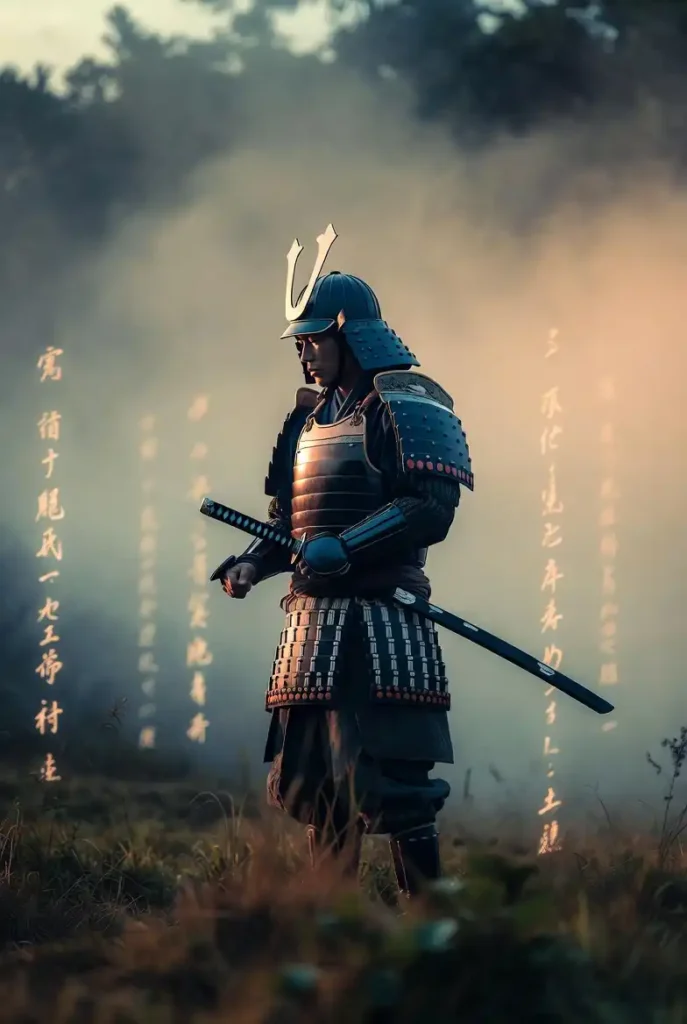
The structural collapse of the samurai class culminated in the Meiji Restoration of 1868, wherein lower-ranking samurai successfully overthrew the shogunate and returned power to the Emperor. Ironically, the architects of this new, modern Japan were samurai themselves, and they systematically legislated their own class out of existence.
In 1871, the ancient feudal domains were abolished, severing the deep bonds of lord and vassal. In 1873, the government instituted universal military conscription, stripping the samurai of their sacred monopoly on warfare. Their hereditary rice stipends were forcibly converted into government bonds, plunging many into immediate ruin. The final, most visceral blow came with the Haitōrei Edict of 1876, which explicitly banned the public wearing of the daisho—the paired swords that served as the visible symbol of the samurai’s soul and authority.
Though a desperate faction of traditionalists rose up in the doomed Satsuma Rebellion of 1877, their defeat by a modern army of peasant conscripts marked the definitive, physical end of the samurai. The decline that had begun quietly in the tea rooms and ledger books of the 17th century ended on the battlefield of Shiroyama, leaving behind a profound cultural spirit that would echo through the modern age
The Forges of the Modern Warrior: Master Artisans and Armorers
To walk the path of the bushi is to appreciate the profound weight of iron, leather, and silk. For those seeking to wrap themselves in the historical legacy of the samurai, several masterful workshops and digital armories not only craft these magnificent panoplies but deeply chronicle the evolution of the warrior class.
Iron Mountain Armory (samurai-armor.com / ironmountainarmory.com)
This armory is a revelation for both the martial artist and the historian. They masterfully detail the genealogy of yoroi (armor)—from the imposing, boxy silhouettes of the Heian mounted archers to the highly efficient, bullet-deflecting tōsei-gusoku (“modern equipment”) of the Warring States period. Beyond their rich historical guides, they handcraft fully functional, customizable armor sets, alongside authentic traditional garments like the hakama and the cross-over hakama-shita.
Marutake Armor Factory (marutake-yoroi.myshopify.com/en)
Located in Kagoshima Prefecture, Marutake is the undisputed titan of Japanese armor reproduction, commanding roughly ninety percent of the domestic market for replica armor used in cinema and historical festivals. Their online platform offers beautiful insights into the meticulous, traditional methods required to wear and maintain the armor, while selling breathtaking replicas of legendary warlords like Oda Nobunaga and Takeda Shingen.
Pacific Armory (pacificarmory.com)
For the uninitiated stepping into the world of Japanese metallurgy, Pacific Armory serves as a profound educational gateway. They beautifully demystify the complex terminology of the samurai panoply—breaking down the spiritual and practical purposes of the kabuto (helmet), the terrifying menpō (face mask), and the dō (cuirass). In tandem with this education, they supply handcrafted, authentic-style armor sets built for display, reenactment, and martial practice.
Sanctuaries of Antiquity: Museums and High-End Dealers
For the dedicated collector seeking to possess a genuine artifact forged centuries ago, these institutions bridge the gap between historical preservation and global commerce.
Samurai Museum Shop (samuraimuseum.jp/shop/)
Born from the Samurai Museum in Tokyo’s bustling Shinjuku district, this shop acts as an educational and cultural nexus. They publish detailed guides on how to legally acquire and care for authentic Japanese swords, while offering an astonishing inventory. Here, one can acquire museum-grade antique katanas, intricately carved tsuba (handguards), and magnificent Marutake replica armors.
Samurai Store (samuraistore.com)
This esteemed gallery operates with a deep reverence for the “ceremonial prestige aesthetic” of the Edo period. They offer a staggering array of 100% handcrafted replica armors, but their true allure lies in their curation of highly certified, antique yoroi and kabuto from the 16th to 19th centuries.
Giuseppe Piva Japanese Art (giuseppepiva.com)
Operating at the pinnacle of art dealing, this gallery offers deeply evocative, scholarly articles on the fundamental anatomy and construction of the samurai helmet. For the affluent collector, they offer extraordinarily rare, museum-quality antique armors and helmets, such as the exquisite Suji-bachi and Mōsunari kabuto.
The Path of the Martial Artist: Armaments and Traditional Garb
To understand the philosopher-poet heart of the samurai, one must look at the tools and garments that defined their daily, disciplined existence.
Tozando (tozandoshop.com / japanesesword.net)
Rooted in Kyoto, Tozando is an indispensable resource for the modern budō practitioner. Their blog is a treasure trove of historical research, exploring the daily routines, spiritual philosophies, and economic struggles of the Edo-period warrior. Alongside this profound storytelling, they sell an exhaustive array of martial arts equipment, newly forged katanas (shinsakuto), and traditional yoroi armor.
TrueKatana (truekatana.com)
This platform weaves evocative tales of historical samurai elegance, offering deep walkthroughs of the evolution of civil and martial clothing—from the restrictive kamishimo of the Edo courts to the breathable hitoe worn beneath armor. They cater to enthusiasts by selling a vast array of katanas, ninja swords, and complete Japanese samurai armor sets.
Katana Sword / Katana US (katana-sword.com / katana-us.com)
Delving into the invisible architecture of the warrior’s mind, their articles explore the intimate, spiritual relationship between the samurai, the sword as the “soul of the warrior,” and the overarching ethos of bushidō. Their storefront provides an extensive selection of custom blades, display swords, and samurai armor.
The Global Armories: Merchants of the Blade and Scale
The aesthetic of the samurai has transcended the borders of Japan, maintained by passionate global merchants who ensure the legacy of the bushi continues to echo around the world.
Kult of Athena (kultofathena.com)
As one of the largest global arms dealers, they chronicle the violent, beautiful evolution of the katana and the warriors who wielded it. Their vast inventory includes everything from raw blades to complete suits of samurai armor.
Suigenkyo Online Store (suigenkyo.store)
A beautiful digital space dedicated to preserving the history of Japanese craftsmanship. They offer deep cultural context and interviews with artisans, while serving as a primary vendor for the masterfully crafted Marutake samurai armor and exquisite civilian crafts.
Guardians Vault Australia (guardiansvaultaustralia.com)
This outfitter provides the physical foundation of the warrior’s attire. They offer traditional garments like the flowing hitatare kamishimo—the “upper and lower” clothing set—alongside samurai armor and weaponry.
Battle-Merchant (battlemerchant.com)
A sprawling European hub for historical reenactors. Their blog discusses the profound connection between Zen Buddhism, the bushidō code, and the art of swordsmanship. They supply a diverse range of armors, katanas, and maintenance kits.
Espadas y Más (espadasymas.com)
This Spanish marketplace explores the melancholic legacy of the rōnin (masterless samurai) and the profound bond of honor forged in steel. They cater to the European market with an array of anime-inspired weapons, historical Japanese helmets, and martial armor.
Wyrmwick (wyrmwick.com)
Though primarily focused on European and fantasy aesthetics, this UK-based armory provides high-quality polyurethane armor replicas for historical reenactment, film, and theater, offering an accessible entry point for those wishing to don the heavy mantle of the past.
- The primary weapon of the samuraiThere was no single primary weapon across their entire history; rather, their favored instrument of war evolved in harmony with the changing tides of battle and society. The wind howls across the plains of feudal Japan, carrying the scent of pine and impending conflict. When we picture the noble samurai standing amidst this tempest, our… Read more: The primary weapon of the samurai
- A Sci-Fi Remake Of An Akira Kurosawa Seven Samurai Classic Has To Be Seen To Be BelievedAkira Kurosawa Seven Samurai Classic. How far can the soul of a sword travel? Is it bound by the gravity of the earth, destined only to echo in the rain-drenched soil of 16th-century Japan, or does the spirit of the bushi transcend into the cold vacuum of space? As a researcher walking the path of… Read more: A Sci-Fi Remake Of An Akira Kurosawa Seven Samurai Classic Has To Be Seen To Be Believed
- Neo Bushido Cyborg Warrior T-Shirts: Fuse Ancient Samurai Honor with Cyberpunk Edge at Babul StoreIn a world drowning in generic streetwear, one collection cuts through the noise like a mono-molecular blade: the Neo Bushido Cyborg Warrior T-shirts from Babul Store. This isn’t just another graphic tee drop. It’s a full-throttle reimagining of the samurai soul for the year 2099 — where tradition meets chrome, honor meets hacks, and your… Read more: Neo Bushido Cyborg Warrior T-Shirts: Fuse Ancient Samurai Honor with Cyberpunk Edge at Babul Store
- Kurosawa’s films influence modern stories like Star WarsWhen we gaze up at the starlit expanse of a cinematic galaxy far, far away, we are, in truth, looking down into the rain-soaked mud and mist of feudal Japan. Long before lightsabers hummed in the dark, the sharp ring of the samurai sword echoed through the visionary mind of Japanese auteur Akira Kurosawa. To understand the… Read more: Kurosawa’s films influence modern stories like Star Wars
- Mono no AwareIt fit not as a contradiction, but as the very heart of the samurai soul. Mono no aware — that exquisite, aching awareness of how beautiful things are precisely because they are fleeting — was never a soft indulgence for the bushi. It was the emotional and philosophical steel that made their hardness meaningful. The… Read more: Mono no Aware