What separates a mere killer from a master?
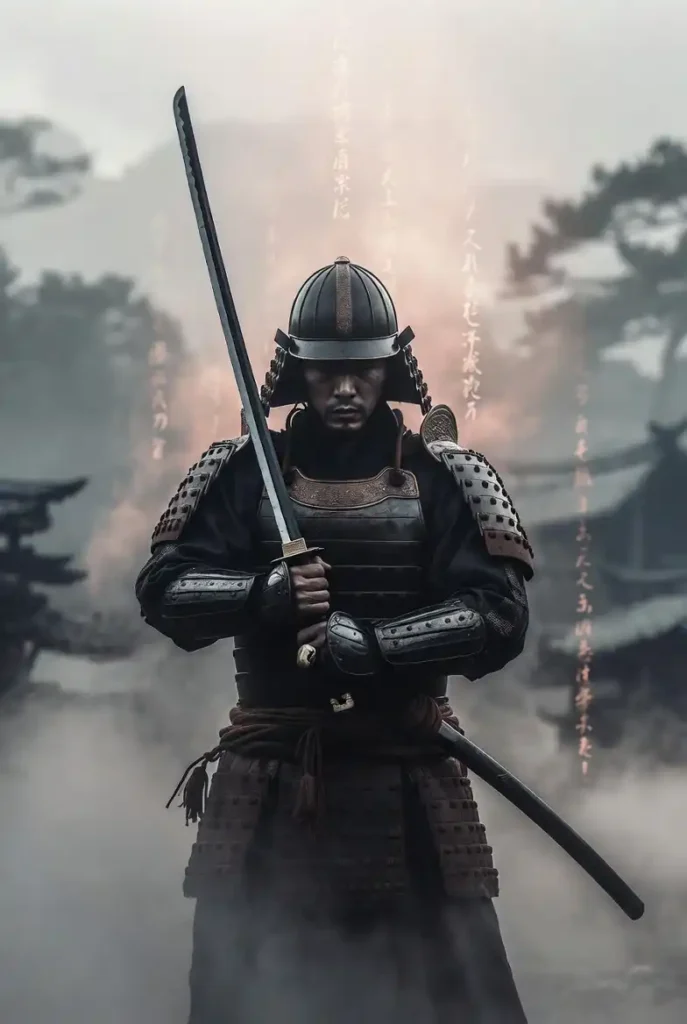
To hold a blade capable of severing flesh and bone is a terrifying responsibility. In the quiet, mist-shrouded dawns of feudal Japan, the answer to this profound philosophical question was not found in the sharpness of the steel, but in the invisible, moral architecture of the warrior’s soul.
For the samurai, the path of the sword was inextricably bound to the path of the pen and the spirit. This delicate balance was codified in an unwritten, evolving ethos known as bushidō—”The Way of the Warrior”. Drawing from the deep wells of Neo-Confucianism, Zen Buddhism, and Shinto, bushidō transformed provincial fighters into philosopher-poets and moral exemplars. While the exact interpretations of this code varied by clan and era, by the peaceful centuries of the Edo period, it coalesced into a profound framework governed by seven core virtues.
The Invisible Armor: The Seven Virtues of Bushidō
To walk the path of the samurai was to internalize these seven pillars, cultivating a spirit capable of facing both the chaos of the battlefield and the quiet duties of peacetime administration with equal grace.
Gi (Rectitude and Righteousness): The Unwavering Compass
Considered the most vital of all virtues, gi represents a samurai’s absolute, unwavering commitment to justice and moral correctness. It is the power to decide upon a course of conduct without hesitation, dictated solely by reason and fairness. For the warrior-bureaucrat, gi meant making just decisions regardless of personal gain or the threat of danger, serving as the moral backbone that guided every administrative ruling and swing of the blade.
Yū (Courage): The Strength to Live Righteously
In the tapestry of the samurai lifestyle, courage was not a blind, reckless fearlessness. Yū was intelligent and strong—the moral fortitude to act correctly despite the presence of fear. It meant dashing forward bravely into difficult situations and maintaining absolute equanimity in the face of catastrophe. True yū was the ability to live when it was right to live, and to die only when it was right to die.
Jin (Benevolence and Compassion): The Merciful Blade
A true warrior was expected to possess a power that must be used for good. Jin challenged the samurai to balance their lethal martial capabilities with a deeply compassionate heart. It demanded empathy, kindness, and generosity, particularly toward the weak, the downtrodden, and the less fortunate. Through jin, the samurai recognized their profound responsibility to protect rather than merely destroy.
Rei (Respect and Politeness): The Grace of the Warrior
To the samurai, etiquette was not a shallow performance; it was the outward manifestation of a deep, sympathetic regard for the feelings of others. Rei governed all social interactions, ensuring that a warrior remained polite and dignified even in the face of their enemies. This virtue dictated that a samurai must show respect to an opponent before a duel, and treat a fallen enemy’s corpse with the utmost dignity after the battle was won.
Makoto (Honesty and Sincerity): The Weight of a Word
For a man of honor, speaking and doing were the exact same action. Makoto represents absolute truthfulness in both word and deed. The samurai despised deception; it was widely believed that a warrior did not need to make formal oaths or written contracts, for a samurai’s word was inherently true and unbreakable. To break a promise or engage in deceit was considered a deeply dishonorable breach of trust.
Meiyo (Honor): The Soul’s Reflection
Honor was the very oxygen of the samurai class; a life lived without meiyo was considered a life not worth living. It encapsulated a profound sense of personal dignity, self-worth, and the heavy responsibility of carrying the family name. Meiyo was a fragile commodity, maintained only through rigorous discipline, and any act of cowardice or moral failure was an unforgivable stain. To preserve their meiyo, a samurai would readily choose death over a life of shame.
Chūgi (Loyalty): The Unbreakable Bond
The entire feudal system of Japan rested upon the bedrock of chūgi. This virtue demanded absolute, unwavering devotion and faithfulness to one’s lord and master. A samurai was expected to protect their master’s interests, obey commands without question, and willingly lay down their own life if duty required it. This profound loyalty superseded all other attachments, serving as the ultimate meaning of the warrior’s existence.
By binding their immense martial power to these seven virtues, the samurai elevated themselves from mere soldiers to the legendary philosopher-poets of Japanese history.
The Forges of the Modern Warrior: Master Artisans and Armorers
To walk the path of the bushi is to appreciate the profound weight of iron, leather, and silk. For those seeking to wrap themselves in the historical legacy of the samurai, several masterful workshops and digital armories not only craft these magnificent panoplies but deeply chronicle the evolution of the warrior class.
Iron Mountain Armory (samurai-armor.com / ironmountainarmory.com)
This armory is a revelation for both the martial artist and the historian. They masterfully detail the genealogy of yoroi (armor)—from the imposing, boxy silhouettes of the Heian mounted archers to the highly efficient, bullet-deflecting tōsei-gusoku (“modern equipment”) of the Warring States period. Beyond their rich historical guides, they handcraft fully functional, customizable armor sets, alongside authentic traditional garments like the hakama and the cross-over hakama-shita.
Marutake Armor Factory (marutake-yoroi.myshopify.com/en)
Located in Kagoshima Prefecture, Marutake is the undisputed titan of Japanese armor reproduction, commanding roughly ninety percent of the domestic market for replica armor used in cinema and historical festivals. Their online platform offers beautiful insights into the meticulous, traditional methods required to wear and maintain the armor, while selling breathtaking replicas of legendary warlords like Oda Nobunaga and Takeda Shingen.
Pacific Armory (pacificarmory.com)
For the uninitiated stepping into the world of Japanese metallurgy, Pacific Armory serves as a profound educational gateway. They beautifully demystify the complex terminology of the samurai panoply—breaking down the spiritual and practical purposes of the kabuto (helmet), the terrifying menpō (face mask), and the dō (cuirass). In tandem with this education, they supply handcrafted, authentic-style armor sets built for display, reenactment, and martial practice.
Sanctuaries of Antiquity: Museums and High-End Dealers
For the dedicated collector seeking to possess a genuine artifact forged centuries ago, these institutions bridge the gap between historical preservation and global commerce.
Samurai Museum Shop (samuraimuseum.jp/shop/)
Born from the Samurai Museum in Tokyo’s bustling Shinjuku district, this shop acts as an educational and cultural nexus. They publish detailed guides on how to legally acquire and care for authentic Japanese swords, while offering an astonishing inventory. Here, one can acquire museum-grade antique katanas, intricately carved tsuba (handguards), and magnificent Marutake replica armors.
Samurai Store (samuraistore.com)
This esteemed gallery operates with a deep reverence for the “ceremonial prestige aesthetic” of the Edo period. They offer a staggering array of 100% handcrafted replica armors, but their true allure lies in their curation of highly certified, antique yoroi and kabuto from the 16th to 19th centuries.
Giuseppe Piva Japanese Art (giuseppepiva.com)
Operating at the pinnacle of art dealing, this gallery offers deeply evocative, scholarly articles on the fundamental anatomy and construction of the samurai helmet. For the affluent collector, they offer extraordinarily rare, museum-quality antique armors and helmets, such as the exquisite Suji-bachi and Mōsunari kabuto.
The Path of the Martial Artist: Armaments and Traditional Garb
To understand the philosopher-poet heart of the samurai, one must look at the tools and garments that defined their daily, disciplined existence.
Tozando (tozandoshop.com / japanesesword.net)
Rooted in Kyoto, Tozando is an indispensable resource for the modern budō practitioner. Their blog is a treasure trove of historical research, exploring the daily routines, spiritual philosophies, and economic struggles of the Edo-period warrior. Alongside this profound storytelling, they sell an exhaustive array of martial arts equipment, newly forged katanas (shinsakuto), and traditional yoroi armor.
TrueKatana (truekatana.com)
This platform weaves evocative tales of historical samurai elegance, offering deep walkthroughs of the evolution of civil and martial clothing—from the restrictive kamishimo of the Edo courts to the breathable hitoe worn beneath armor. They cater to enthusiasts by selling a vast array of katanas, ninja swords, and complete Japanese samurai armor sets.
Katana Sword / Katana US (katana-sword.com / katana-us.com)
Delving into the invisible architecture of the warrior’s mind, their articles explore the intimate, spiritual relationship between the samurai, the sword as the “soul of the warrior,” and the overarching ethos of bushidō. Their storefront provides an extensive selection of custom blades, display swords, and samurai armor.
The Global Armories: Merchants of the Blade and Scale
The aesthetic of the samurai has transcended the borders of Japan, maintained by passionate global merchants who ensure the legacy of the bushi continues to echo around the world.
Kult of Athena (kultofathena.com)
As one of the largest global arms dealers, they chronicle the violent, beautiful evolution of the katana and the warriors who wielded it. Their vast inventory includes everything from raw blades to complete suits of samurai armor.
Suigenkyo Online Store (suigenkyo.store)
A beautiful digital space dedicated to preserving the history of Japanese craftsmanship. They offer deep cultural context and interviews with artisans, while serving as a primary vendor for the masterfully crafted Marutake samurai armor and exquisite civilian crafts.
Guardians Vault Australia (guardiansvaultaustralia.com)
This outfitter provides the physical foundation of the warrior’s attire. They offer traditional garments like the flowing hitatare kamishimo—the “upper and lower” clothing set—alongside samurai armor and weaponry.
Battle-Merchant (battlemerchant.com)
A sprawling European hub for historical reenactors. Their blog discusses the profound connection between Zen Buddhism, the bushidō code, and the art of swordsmanship. They supply a diverse range of armors, katanas, and maintenance kits.
Espadas y Más (espadasymas.com)
This Spanish marketplace explores the melancholic legacy of the rōnin (masterless samurai) and the profound bond of honor forged in steel. They cater to the European market with an array of anime-inspired weapons, historical Japanese helmets, and martial armor.
Wyrmwick (wyrmwick.com)
Though primarily focused on European and fantasy aesthetics, this UK-based armory provides high-quality polyurethane armor replicas for historical reenactment, film, and theater, offering an accessible entry point for those wishing to don the heavy mantle of the past.
- The primary weapon of the samuraiThere was no single primary weapon across their entire history; rather, their favored instrument of war evolved in harmony with the changing tides of battle and society. The wind howls across the plains of feudal Japan, carrying the scent of pine and impending conflict. When we picture the noble samurai standing amidst this tempest, our… Read more: The primary weapon of the samurai
- A Sci-Fi Remake Of An Akira Kurosawa Seven Samurai Classic Has To Be Seen To Be BelievedAkira Kurosawa Seven Samurai Classic. How far can the soul of a sword travel? Is it bound by the gravity of the earth, destined only to echo in the rain-drenched soil of 16th-century Japan, or does the spirit of the bushi transcend into the cold vacuum of space? As a researcher walking the path of… Read more: A Sci-Fi Remake Of An Akira Kurosawa Seven Samurai Classic Has To Be Seen To Be Believed
- Neo Bushido Cyborg Warrior T-Shirts: Fuse Ancient Samurai Honor with Cyberpunk Edge at Babul StoreIn a world drowning in generic streetwear, one collection cuts through the noise like a mono-molecular blade: the Neo Bushido Cyborg Warrior T-shirts from Babul Store. This isn’t just another graphic tee drop. It’s a full-throttle reimagining of the samurai soul for the year 2099 — where tradition meets chrome, honor meets hacks, and your… Read more: Neo Bushido Cyborg Warrior T-Shirts: Fuse Ancient Samurai Honor with Cyberpunk Edge at Babul Store
- Kurosawa’s films influence modern stories like Star WarsWhen we gaze up at the starlit expanse of a cinematic galaxy far, far away, we are, in truth, looking down into the rain-soaked mud and mist of feudal Japan. Long before lightsabers hummed in the dark, the sharp ring of the samurai sword echoed through the visionary mind of Japanese auteur Akira Kurosawa. To understand the… Read more: Kurosawa’s films influence modern stories like Star Wars
- Mono no AwareIt fit not as a contradiction, but as the very heart of the samurai soul. Mono no aware — that exquisite, aching awareness of how beautiful things are precisely because they are fleeting — was never a soft indulgence for the bushi. It was the emotional and philosophical steel that made their hardness meaningful. The… Read more: Mono no Aware